
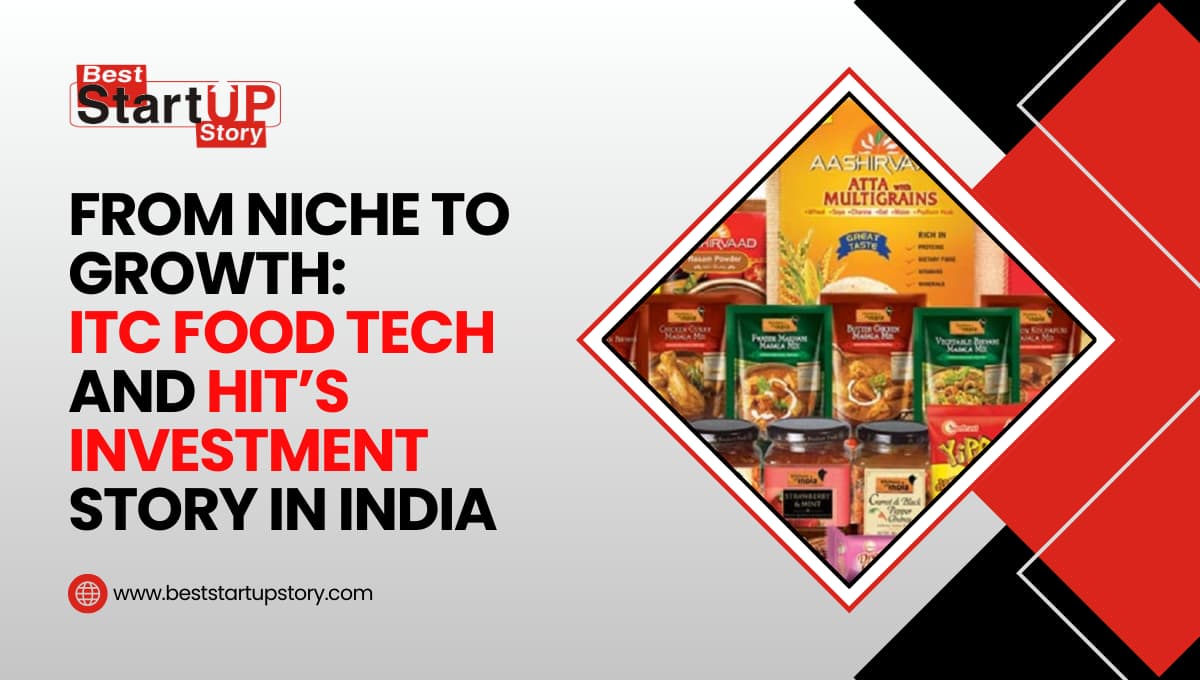
The overall economic landscape in India is fast changing with respect to innovation, sustainability, and digital revolution. Growth can be demonstrated in a variety of cases where businesses are increasing profits for a purpose. Two notable examples of this shift are the growth of ITC Food Tech and the growing commitment to HIT investing in India (High Impact through Technology). Both examples show how organizations are beginning to create sustainable value by combining profitability with purpose. Let’s dive into looking at the key takeaways from both examples in order to understand their specific impacts.
- ITC’s Future-Ready Strategy
- Rise of ITC Food Tech: A Digital-First Food Revolution
- Cloud Kitchens and Omnichannel Approach
- New Products and Brand Extensions
- Frozen Foods and Acquisitions
- Strength in Organics and Natural Products
- ITC’s Agri-Tech Platform: ITCMaars
- Sustainability and Packaging Innovation
- Manufacturing & Supply Chain Resilience
- HIT Investing in India: Technology That Creates Impact
- Understanding HIT Investing
- Why HIT Investing Matters?
ITC’s Future-Ready Strategy
ITC Ltd., a leading multi-product conglomerate in India with businesses in FMCG, agriculture, paperboards, hospitality, and IT services, is now entering new-age businesses such as food tech, wellness, sustainable packaging, and agri-tech, under an ‘ITC Next’ strategy. At the company’s 113th Annual General Meeting, Chairman Sanjiv Puri highlighted that the company was becoming “future ready” by relying on its role in innovation, technology, and consumer anticipation. He spoke on the importance of being “prepared” for a world where there is turbulence, uncertainty, rapid change, and the requirement for novel strategies.
Rise of ITC Food Tech: A Digital-First Food Revolution
One of the most exciting developments in ITC’s journey is the rise of ITC Food Tech, a vertical that combines its strengths in packaged foods, hospitality, and digital delivery platforms. Operating with four main brands, ITC Master Chef Creations, Aashirvaad Soul Creations, Sunfeast Baked Creations, and Sansho, this segment has grown at a compound annual rate of 108% over the past three years.
Cloud Kitchens and Omnichannel Approach
Right now, ITC Food Tech has 60 cloud kitchens in five cities and is looking to expand across India. These kitchens serve consumers high-quality food through food delivery apps such as Swiggy and Zomato. Rohit Bhalla, the Business Head of ITC Food Tech, indicated that the objective is to establish separate food missions for each brand and to provide them with convenience, authenticity, and value.
New Products and Brand Extensions
In FY25 alone, ITC launched over 100 new products in areas such as health, wellness, convenience, and protection. These include:
- Pranah, a brand that offers aromatherapy-based incense sticks and candles
- Right Shift, which is aimed at people over 40, provides nutrition products based on natural ingredients and clinical research
Frozen Foods and Acquisitions
ITC’s frozen food segment is expanding rapidly under the ITC Master Chef label, which now includes over 80 SKUs covering snacks, breads, and seafood. The acquisition of Prasuma, known for frozen Pan-Asian foods, added another 170+ product options available in more than 100 cities. ITC is also growing in premium packaged products, such as Sunfeast Baked Creations (premium cookies) and Fiama’s Japanese Hokkaido milk-based soap. All of these represent strategic moves into fast-growing, high-margin spaces.

Strength in Organics and Natural Products
ITC invested substantial amounts in the organic and natural categories. The recent acquisition of 24 Mantra Organic (1.4 lakh acres of certified farmland) enhances its organic food portfolio. Investments in Yoga Bar and Mother Sparsh (natural baby care) support its ambition in this area. These acquisitions are structured to also maintain the entrepreneurial spirit of the original companies and the use of ITC’s supply chain, R&D, and brand capability.
ITC’s Agri-Tech Platform: ITCMaars
In line with its deep-rooted agricultural presence, ITC has launched ITCMaars, an agri-tech platform supporting:
- 2,050+ Farmer-Producer Organisations
- 22 lakh+ farmers across 11 states
This platform offers AI-based crop advisories, drone services, diagnostics, input access, credit, and market linkages. These efforts have reportedly led to 15–20% higher yields and 30% improvement in farm incomes. The company is also empowering women through models like ‘Drone Didis’, where local women are trained to use drones in farming. This is done to boost both productivity and livelihoods.
Sustainability and Packaging Innovation
ITC is committed to sustainable practices. Its new packaging brands, Filo, Bioseal, and Fyba, use renewable materials such as bamboo, sugarcane bagasse, and recycled paper as alternatives to plastic.
- The Fyba unit in Madhya Pradesh is at the center of this green transformation
- Sustainable packaging has grown 2.4x since FY22
Additionally, ITC is addressing climate risk through climate-smart agriculture, now spanning 31 lakh acres with a target of 40 lakh acres by 2030.
Manufacturing & Supply Chain Resilience
To prepare for future disruptions, ITC is investing ₹20,000 crore across FMCG, agri-business, exports, and packaging. Over 90% of its raw materials are locally sourced, and its 250+ factories now form a highly integrated manufacturing and logistics network.
HIT Investing in India: Technology That Creates Impact
As ITC continues to explore the industries of food tech and sustainability, another significant trend that is redefining the Indian business and startup ecosystem is High Impact Investing in India, also called HIT investing in India. HIT investing is a form of investment strategy that is based on the premise that technology can achieve substantial financial returns while addressing real-world challenges ranging from poverty and lack of access to finance, healthcare, or education.
Understanding HIT Investing
Unlike traditional impact investing, which is often confused with philanthropy or non-profit work, HIT investing focuses on profitable, scalable businesses that create positive social and environmental outcomes.
Real-World Example: Finagg
One prominent example of a HIT investment in India is Finagg, a fintech company that provides small working capital loans to kirana stores, especially those owned by women entrepreneurs. Many of these owners are outside the formal banking system and do not have access to loans, even at affordable interest rates.
Finagg utilizes technology, data analytics, and mobile platforms to understand creditworthiness and provide loans at 18%–20% with fair interest rates, which is substantially lower than often offered by informal moneylenders. This model not only enables small business loan access but also supports women’s financial independence and rural economic growth.
Why HIT Investing Matters?
HIT investing has an increasingly relevant position in the world we live in today. As issues such as climate change, income and wealth inequality, and digital exclusion see a spike in occurrence through normal life and lifestyle decisions, investors are realizing that purpose and profit are not mutually exclusive objectives. It is no longer a matter of either doing good or making money; HIT investing in India combines both.
The Future of Profit with Purpose
The stories of ITC Food Tech and HIT investing in India show how business and impact can go hand-in-hand. ITC is transforming what a future-ready Indian conglomerate looks like by betting big on innovation, sustainability, and digital-first platforms. At the same time, HIT investing is proving that technology-led impact is not only possible but also profitable. As India moves forward, these models offer blueprints for businesses looking to thrive responsibly in the 21st century.
Also Read – Top 10 Best Kunafa Places in Dubai, UAE