
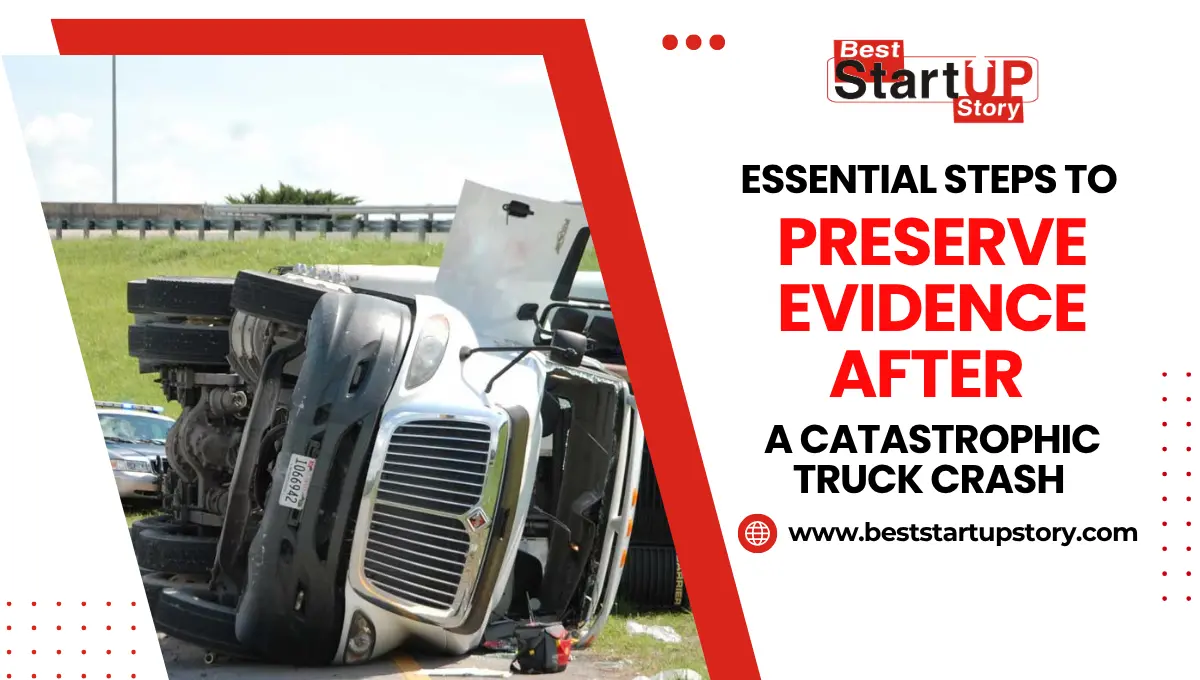
When a catastrophic truck crash occurs, the aftermath is often overwhelming. Victims and their families face physical injuries, emotional trauma, and financial burdens. Yet, in addition to seeking medical care, one of the most crucial steps after such an accident is ensuring that vital evidence is preserved. In order to reduce liability, trucking companies and their insurance take swift action; victims must follow suit to safeguard their rights. Evidence collected immediately after the crash can make the difference between a weak claim and a strong, successful case. Strong Evidence in an 18-wheeler crash can include black box data, police reports, and driver logs, all of which play a critical role in proving negligence and securing fair compensation.
Table of Contents
Why Preserving Evidence Matters?
Evidence is the foundation of any legal claim following a truck accident. In contrast to minor vehicle collisions, truck crashes often involve multiple parties: the truck driver, the trucking company, maintenance contractors, and sometimes even manufacturers. Each may share some degree of liability. The more substantial and more detailed the evidence, the easier it becomes to prove fault and secure fair compensation. Delays can result in critical data being lost, destroyed, or intentionally concealed.
Step 1: Seek Immediate Medical Care
While medical care primarily safeguards health, it also establishes documentation that can later serve as legal evidence. Medical records link injuries directly to the accident, detailing the severity of harm and necessary treatments. Skipping this step or delaying care can create gaps in evidence, making it harder to connect injuries to the crash.
Step 2: Document The Scene
If possible, gather information directly from the accident site. Photographs and videos of vehicle positions, skid marks, road conditions, weather, and traffic signals provide irreplaceable visual context. These images can help accident reconstruction experts determine how the crash happened. Witness statements should also be collected, as independent accounts often strengthen the case.
Step 3: Secure The Truck’s Black Box Data
The Electronic Control Module (ECM), sometimes referred to as the “black box,” is a feature found on the majority of commercial trucks. This device records crucial data, such as the truck’s speed, brake usage, and engine performance at the time of the crash. Obtaining this information quickly is vital, as trucking companies may erase or overwrite it. An attorney can file a preservation letter to ensure this data is not destroyed.
Step 4: Obtain Police Reports
Law enforcement officers responding to the crash usually prepare an official accident report. These reports often contain diagrams, officer observations, and sometimes preliminary fault assessments. Although not always conclusive, they serve as a critical starting point for building a claim. Requesting and preserving this documentation early ensures it becomes part of the case record.
Step 5: Preserve Vehicle Evidence
The damaged vehicles themselves hold valuable clues. A truck’s condition may reveal improper maintenance, faulty brakes, or worn tires, all of which can indicate negligence. Victims should avoid rushing repairs or disposing of the vehicle before it is inspected by experts. Attorneys often arrange for mechanical inspections to document any defects.
Step 6: Collect Driver And Company Records
A trucking company’s records can expose patterns of negligence. Driver logs, rest schedules, maintenance reports, and drug or alcohol testing records may reveal violations of federal safety regulations. However, companies are not required to keep these records indefinitely. Acting quickly to request and secure them prevents the loss of vital information.
Step 7: Work With Expert Witnesses
Expert testimony strengthens a case significantly. Accident reconstruction specialists, medical experts, and trucking industry professionals can interpret evidence in ways that judges and juries clearly understand. Preserving evidence early ensures these experts have the data they need to provide credible, persuasive testimony.
Step 8: Consult An Experienced Truck Accident Attorney
Perhaps the most important step in preserving evidence is working with an attorney who understands trucking laws and litigation strategies. Attorneys can issue preservation letters, file motions to prevent evidence destruction, and act quickly to secure documents and data. Without legal guidance, victims risk losing access to crucial proof.
Conclusion
A catastrophic truck crash can alter lives in an instant. Yet, the path to justice depends largely on the evidence preserved in the days and weeks following the accident. From medical records and photographs to black box data and company records, every detail matters. Victims and their families can safeguard their rights and present a compelling case for compensation by acting quickly and obtaining the assistance of an experienced lawyer. Preserving evidence is not just a legal formality it is the cornerstone of accountability and recovery after a devastating truck accident.
Also Read: Key Competencies Learned In An Adelaide First Aid Course