
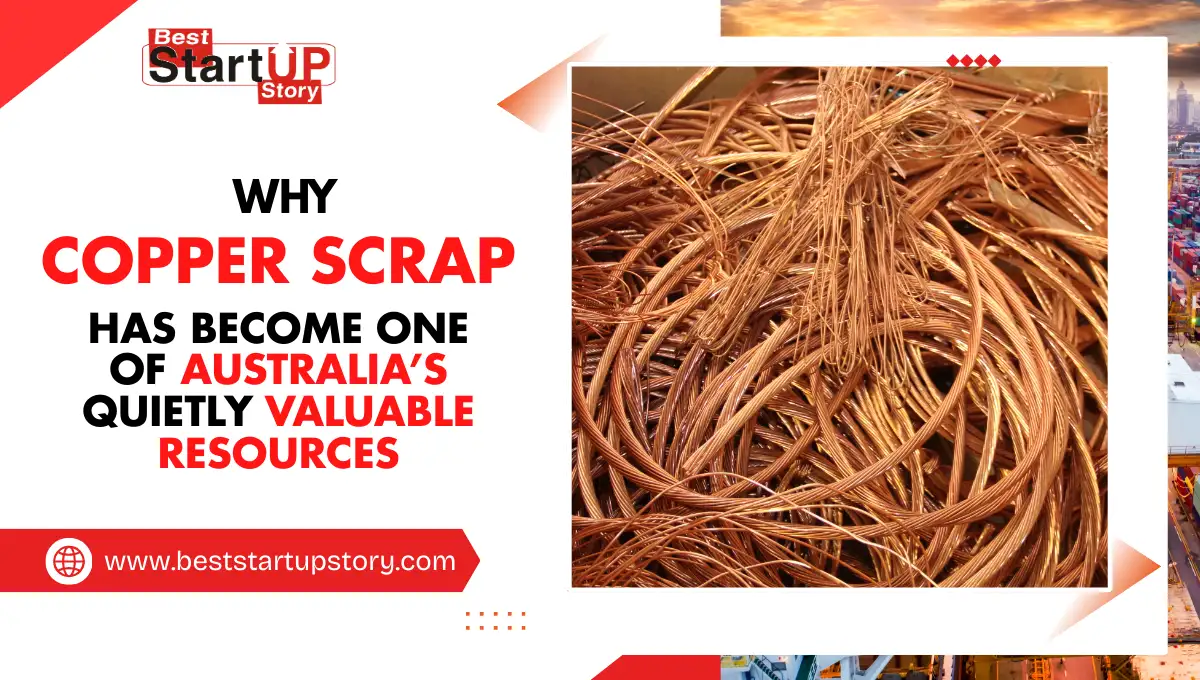
If you’ve ever cleaned out a shed, renovated a room, or watched an electrician strip cables on-site, you’ve probably seen little bits of reddish metal lying around. Nothing fancy at first glance. Just offcuts. Old wires. Maybe a worn-out pipe. But here’s the funny thing. That humble pile sitting in a dusty corner is worth far more than most people realise. Copper Scrap has become one of those quiet heroes in Australia’s recycling world. No fuss. No hype. Just steady value.
And because the conversation around sustainability is getting louder each year, it’s time people understood why this particular material is such a game changer. So let’s walk through it the way a normal person would. Not in a textbook tone. More like you and I standing in a garage, looking at a tangled bunch of wires and thinking… huh, didn’t expect that to be worth something.
Copper Scrap Has Real, Everyday Value
A lot of recyclables fluctuate, but Copper Scrap holds strong even in weird market conditions. Traders talk about it like old friends. Dependable. Always in demand. It doesn’t matter if it’s from a renovation, a demolition site, or a bundle of old cables sitting behind a workbench. Copper Scrap consistently convinces people to recycle rather than dump it. And honestly, that’s where half the charm lies. You get paid. The environment gets a break. Win win.
Electricians, plumbers, and even regular homeowners eventually stumble onto this reality. There’s money in those tangled wires. Enough that people start collecting it on purpose instead of tossing it aside.
The Circular Economy Loves Copper
Australia’s been talking about a circular economy for a few years now. Some folks roll their eyes at the buzzwords, but the idea itself makes sense. Use things. Reuse them. Keep materials moving instead of burying them in the ground.
Copper Scrap fits perfectly into that cycle. The metal can be melted down and reused without losing quality. Over and over. Like a loop that never really ends. And that reduces the pressure on mining, which is pretty significant when you think about how much copper goes into power lines, plumbing, electronics, renewable energy projects, and basically anything carrying electricity.
So while a single handful of Copper Scrap feels small, multiply that by thousands of households and work sites, and the impact becomes huge.
Not All Copper Scrap Is The Same
This part surprises beginners. If you go to a scrap yard expecting a single price, you’ll probably get a quick lesson. Copper Scrap is sorted into different grades. Bright copper wire. Mixed copper. No. 1. No. 2. Insulated. Burnt. Each type gets a different rate because the purity changes how easily recyclers can process it.
Electricians usually end up with the highest-value stuff because clean copper wiring has minimal impurities. Old plumbing pipe also fetches decent prices, although it depends on coatings, fittings, and how corroded it is.
I’ve seen people pull apart old appliances just to grab the copper coils inside. Kind of funny. Kind of clever. And very on-brand for Australia’s growing interest in waste-to-income opportunities.
Why Copper Scrap Prices Move Around
Here’s where it gets interesting. Copper Scrap prices don’t just run on local demand. They tie into global markets. If major countries increase manufacturing, prices rise. If mining output dips, prices rise. If the Australian dollar weakens, scrap sellers often get better returns. It’s a strange dance between international economics and whatever’s sitting in your shed.
Some people watch the price charts like they’re checking the weather. Others accidentally sell at the perfect moment without realising it. Either way, Copper Scrap isn’t random waste. It’s a small commodity. A quiet one, but still very much in the game.
Australians Are Getting Better At Recycling Copper
There was a time when leftover cables and pipes went straight into the skip bin. No second thought. But households and tradespeople are waking up to the value of Copper Scrap. Even small quantities add up.
Scrap yards now offer mobile pickup services too. You call. They come. They weigh everything on digital scales. And just like that, money hits your account. No long drives across town. No haggling. Just quick recycling with a benefit attached.
This convenience has shifted how people think about waste. If it’s valuable, why throw it out. And copper, thankfully, is one of the most valuable items the average person can recycle without specialized equipment.
A Tiny Bit Of Environmental Impact… That Adds Up
Every kilo of Copper Scrap recycled is a kilo that doesn’t have to be mined, refined, and transported from the ground. Mining is heavy. Energy-intensive. Not cheap. Recycling uses far less energy. Almost everyone knows that in theory. But when you hold a handful of Copper Scrap and think about the energy saved by reusing it, the picture becomes more real.
Environmentally minded households have started sorting their metals more consciously. Some even teach their kids how to separate Copper Scrap from steel and brass. Not in a boring lecture way. More like, look how cool it is that this goes back into something new.
Trades Benefit The Most… But Homeowners Catch On Too
Electricians probably earn the most from Copper Scrap because wiring offcuts are everywhere. Plumbers too. Renovators. Demolition crews. Anyone pulling apart old buildings, really.
But I’ve met homeowners who’ve paid an entire month’s energy bill by recycling Copper Scrap from a bathroom reno. A few metres of old pipe. Some fittings. Loose wires saved during cleanup. Didn’t look like much, but it added up nicely.
The more people learn about Copper Scrap, the more they realise it’s not junk. It’s a small but steady income stream hiding in plain sight.
Final Thought
Copper Scrap has quietly become one of Australia’s most valuable recyclables. Not flashy. Not dramatic. Just consistently useful. The kind of material that rewards attention. It supports the circular economy, encourages people to think twice about waste, and gives tradespeople and households a reason to recycle properly.
And maybe that’s why it stands out. It’s a practical little loop of sustainability with Union Metal Recycling. The stuff we overlook becoming something important.
Also Read – The Synergy of NDIS Plan Management and Advocacy