
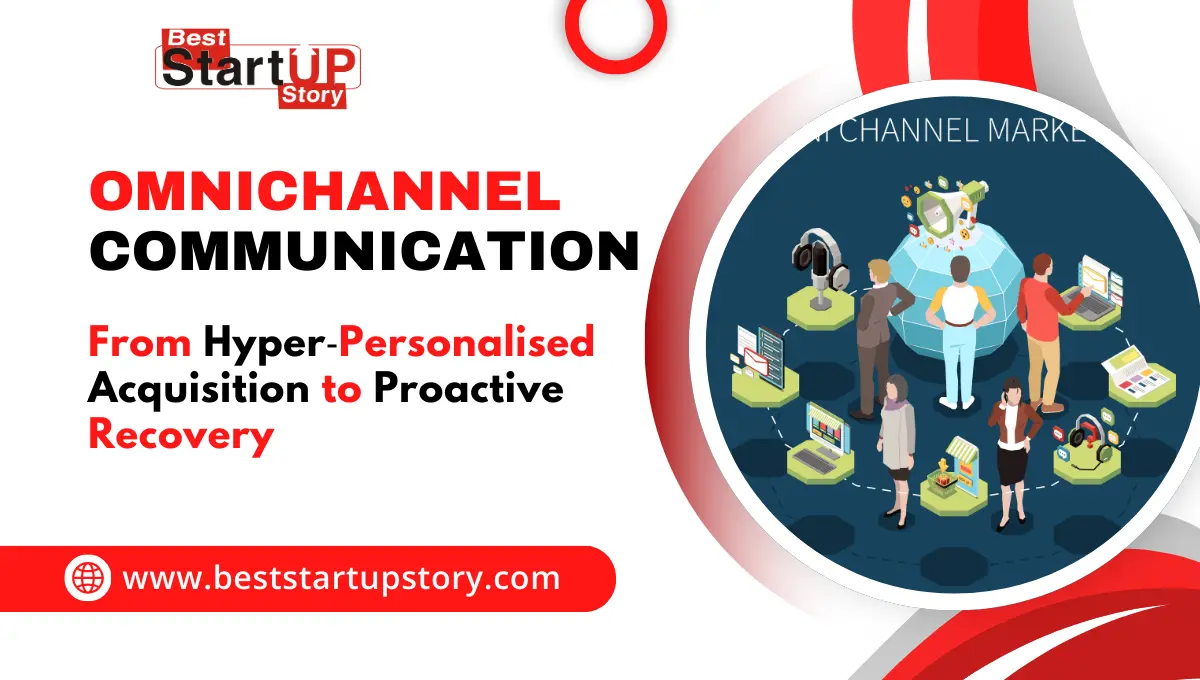
What does “omnichannel” really mean in lifecycle banking?
An omnichannel communication strategy connects every customer touchpoint, including mobile app, web, branch, call centre, ATM, email, SMS, and WhatsApp, into a single, continuous conversation.
Unlike multichannel, omnichannel ensures context matches with the customer, decisions are consistent, and compliance artefacts (consents, disclosures) appear at the right moment in every channel. A successful omnichannel communication strategy eliminates repeat questions, shortens journeys, and builds trust.
In digital banking services, “lifecycle” spans acquisition → onboarding → activation → usage/upsell → service → collections/recovery. An omnichannel communication strategy makes each stage feel intuitive and connected.
Start a credit card upgrade on mobile, confirm on the web, ask a human for advice in a branch, and still experience a single coherent flow. That continuity requires a unified customer view, real‑time orchestration, and event‑driven data across systems.
Why are banks moving from multichannel to omnichannel?
Customers now benchmark their bank’s experience against ecommerce leaders. They expect personalisation, speed, and continuity across channels. They want no repeating PAN, no re‑explaining intent, and no starting over when switching devices.
Banks that deliver unified journeys see higher satisfaction, more conversions, and lower churn. Those stuck in silos lose ground to fintechs that get it right. Leading case studies reflect this shift.
An Indian banking Group unified CRM and origination to cut friction across chat, email, and phone. In this case, machine learning in finance is instrumental.
So a request raised in one channel continues seamlessly in another. An Asian bank digitised card customer life-cycle management journeys to reduce manual work and cost‑to‑serve while improving the experience.
From Hyper‑personalised Acquisition to Proactive Recovery
1) Hyper‑personalised acquisition
Acquisition should feel bespoke, not broadcast. Use behavioural and transactional signals to tailor offers and channels in real time. Push a pre‑approved loan via mobile, nudge a limit increase via WhatsApp, or present a card upgrade in‑app with personalised benefits.
The orchestration engine should choose the next best message, channel, and moment, compressing campaign cycles from weeks to minutes.
Platforms designed for BFSI now enable this at scale: unified data fabrics, CDPs, and orchestration layers pick the right intervention across channels and preserve context. Consulting frameworks describe the pillars like unified data, real‑time decisioning, and embedded compliance as the backbone for authentic omnichannel engagement.
2) Seamless onboarding and activation
Once a customer responds, onboarding must be friction‑light and consistent. Successful banks digitise identity, KYC, disclosures, and consents so that the same signed artefacts follow the user across apps, web, and branches. ICICI’s contactless sourcing and video‑KYC illustrate how integrated digital flows can speed issuance while reducing manual errors.
Activation is a critical conversion lever. Many institutions report jumps in active usage when activation drops from minutes to seconds and when customers can self‑serve across channels without logging into different systems or repeating steps.
3) Usage and upsell, continuously orchestrated
An omnichannel communication strategy in banking isn’t like “set and forget.” As customers use products, the bank should recognise events like a large spend, a recurring bill, or a travel pattern.
Thus, banks can trigger relevant journeys, such as transaction‑to‑EMI, limit enhancements, and co‑branded upgrades. But without losing context. The goal is in‑moment relevance. Show exactly what matters, in the channel the customer is already using.
4) Service that feels human, even when automated
A 360° profile should empower call centre agents and digital assistants alike. With omnichannel orchestration, a complaint raised on chat appears in the phone IVR.
A branch officer sees prior digital interactions, and self‑service options mirror assisted service. This reduces cost‑to‑serve and response times while keeping tone, content, and context consistent.
5) Proactive, respectful recovery
Recovery is part of the customer journey, not an exception. Omnichannel tools help banks group customers by behaviour and risk and pick the right tone and channel, such as email, WhatsApp, or a call.
Then send reminders at the best time. Adding compliance elements, such as clear disclosures, consent-based communication, and grievance options, keeps the process fair and easy to audit.
Why is a Fintech Solution needed in India?
Indian banks and NBFCs operate at scale under tight RBI rules and serve customers who expect instant, transparent decisions. Creditas specialises in fast, compliant digital journeys for lending and cards.
Thus reducing activation times from minutes to seconds, orchestrating upgrades and limit enhancements, and generating/delivering compliant artefacts inline. The result is higher adoption and spending, with audit‑ready records and minimal operational overhead.
This is what an omnichannel communication strategy looks like in practice:
- Digital disbursals in ~60 seconds for pre‑approved portfolios, with consent and disclosures captured inside the flow.
- Card activation, upgrades, and limit enhancements are executed in seconds and mirrored across self‑serve and assisted channels.
- KFS/consent capabilities that generate signed documents rapidly and deliver them to verified addresses, reinforcing compliance without slowing journeys.
Operational principles for omnichannel lifecycle banking
An effective omnichannel communication strategy means one continuous conversation across all channels. Customers should not have to re-enter data or repeat explanations. Offers accepted, disclosures shown, and consents given must follow them across app, web, branch, and support.
Real-time decisions should include compliance. Orchestration tools can pick the next best step while showing KYC, KFS, and consent at the right time. All records should be archived for easy audits.
Measure what matters. Track activation rates, time to disbursal, cross-sell success, cost to serve, and resolution rates. Integrated digital journeys reduce manual work and speed up fulfilment.
Finally, design recovery as a relationship, not a script. Segment customers by risk, adjust tone and timing, and use consented channels to maintain trust while improving resolution.
A Customized Approach for Banks
In lifecycle banking, an omnichannel communication strategy only works when compliance travels with it. If consent, disclosures, and audit trails move as fluidly as offers and alerts, three things happen.
Firstly, customers feel safe. Next, risk teams sleep better, and lastly, conversion rises because customers don’t stall at confusing steps. The practical formula:
Conversion = Continuity (context across channels) × Clarity (KFS upfront) × Control (consent by design)
Banks that adopt orchestration engines, unified identity, and embedded compliance gain an edge in acquisition, activation, and recovery.
Create Trust that Scales
A modern omnichannel communication strategy isn’t about adding channels. It’s about one consistent conversation across all touchpoints. When Indian lenders combine personalized acquisition, smooth onboarding, smart upselling, and proactive recovery with built-in compliance, they build trust that drives conversion. A successful fintech provider can bridge the gap with ready-to-use, compliant journeys that turn speed into confidence, and confidence into growth.
Also Read: Is the Toyota Hilux for Sale in UAE a Practical Pickup for Daily Driving?