
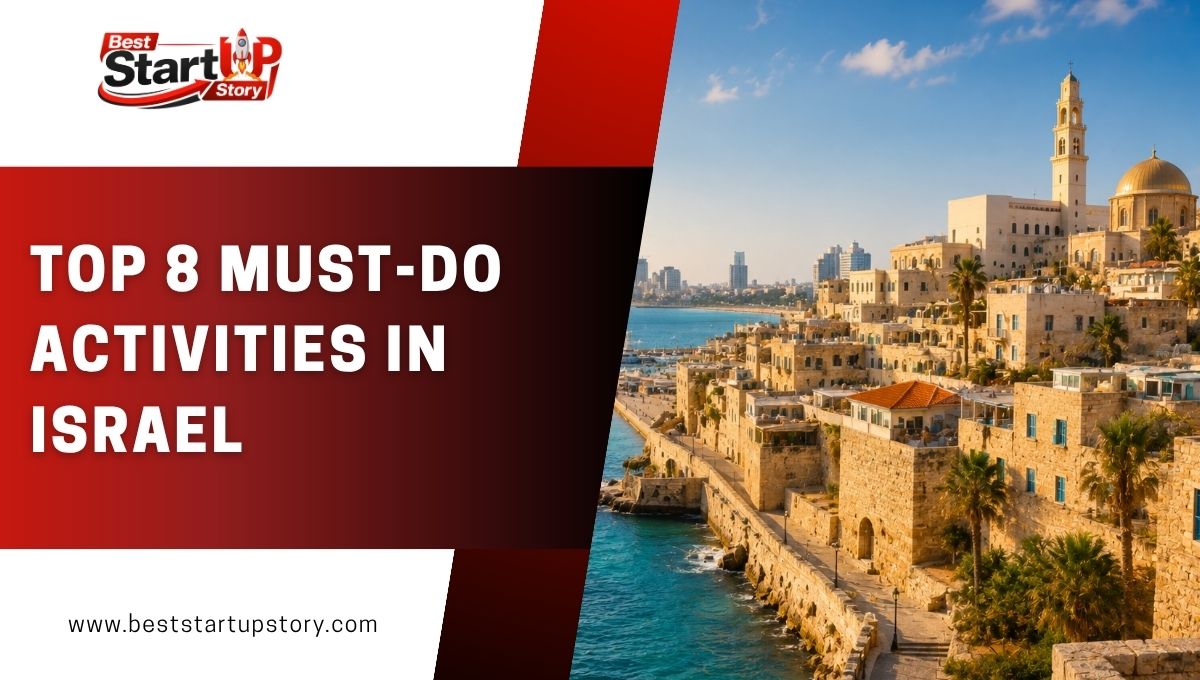
Israel packs an extraordinary range of experiences into a country roughly the size of New Jersey. You can float in the Dead Sea in the morning and stand in the cobblestone alleys of Jerusalem’s Old City by afternoon. Whether the goal is history, faith, food, or landscape, a well-planned itinerary can cover an enormous amount of ground without feeling rushed. Here are eight activities that consistently make a trip to Israel worth the airfare.
Walk the Old City of Jerusalem
The Old City is barely a third of a square mile, yet it holds sites central to three major religions within a few minutes’ walk of each other. The Western Wall, the Church of the Holy Sepulchre, and the Dome of the Rock all sit inside walls built by Suleiman the Magnificent in the 1500s. Spend at least half a day wandering the four quarters — Jewish, Muslim, Christian, and Armenian — since each has its own rhythm, market stalls, and architecture. Early morning visits, before 9 a.m., mean fewer crowds and cooler temperatures for the uphill walking.
Float in the Dead Sea
At 1,412 feet below sea level, the Dead Sea is the lowest point on Earth’s surface, and its salt content — roughly ten times saltier than the ocean — makes sinking nearly impossible. Sites like Ein Gedi and Ein Bokek offer easy beach access, changing facilities, and mineral mud that locals and tourists alike smear on their skin before rinsing off. Plan on 45 minutes to an hour in the water, since prolonged exposure to the salt can irritate skin and eyes. Bring water shoes, since the crystallized salt formations along the shoreline are sharp underfoot.
Explore the Ancient Fortress at Masada
Masada rises nearly 1,300 feet above the Dead Sea’s western shore, and its flat summit holds the remains of King Herod’s palace complex along with the site of the Jewish rebels’ last stand against Rome in 73 CE. Visitors can hike the Snake Path at sunrise, a strenuous 45-minute climb that rewards early risers with cooler air and dramatic light, or take the cable car for a quicker ascent. The archaeological remains, including storerooms, bathhouses, and a Byzantine-era church, are remarkably intact given the site’s age and exposure. A guide adds real value here, since the ruins alone don’t tell the full story without context.
Visit Nazareth and the Sea of Galilee Region
Northern Israel holds many of the locations connected to the life of Jesus, including Nazareth, Capernaum, and the shores of the Sea of Galilee. The Church of the Annunciation in Nazareth, built over the traditional site of the Angel Gabriel’s announcement to Mary, is one of the largest Christian churches in the Middle East. Boat rides on the Sea of Galilee, using replicas of first-century fishing vessels, give a quiet, reflective sense of scale that photos don’t capture. For travelers interested in the historical and spiritual layers of this region, small group Christian tours of Israel run by companies like Immanuel Tours can provide helpful context and pacing that a solo itinerary might miss.
Wander the Markets and Beaches of Tel Aviv
Tel Aviv is Israel’s modern counterpart to Jerusalem’s ancient weight, and the contrast is part of the appeal. Carmel Market (Shuk HaCarmel) is a dense, loud stretch of produce stalls, spice vendors, and street food that rewards an appetite and a bit of patience with crowds. Afterward, the beachfront promenade stretches for several miles, connecting neighborhoods like Jaffa in the south to the marina in the north. Jaffa itself, with its Ottoman-era port and winding artist quarter, is worth a slow afternoon separate from the rest of the city.
Hike the Trails of the Negev Desert
The Negev covers more than half of Israel’s landmass, and its stark canyons and craters offer a completely different landscape from the coast or the north. Makhtesh Ramon, the largest of the world’s erosion craters, spans 25 miles long and offers hiking routes ranging from easy rim walks to multi-day treks. Sunrise and sunset transform the rock colors from tan to deep orange, so timing a visit around those hours pays off. Guided jeep tours are a good option for travelers short on time who still want to see the crater floor.
Visit Yad Vashem in Jerusalem
Yad Vashem, Israel’s official Holocaust memorial and museum, is not a casual stop, but it is one of the most important sites in the country. The Hall of Names alone holds pages of testimony for millions of victims, and the museum’s design forces visitors through a narrowing, darkening path that mirrors the historical narrative. Budget at least three hours, since rushing through diminishes the experience considerably. The Children’s Memorial, a cave-like space lit by candles reflected infinitely in mirrors, is particularly affecting and worth setting aside quiet time for.
Sample Israeli and Middle Eastern Cuisine
Food in Israel reflects waves of immigration from North Africa, Eastern Europe, Yemen, and beyond, so a single meal can include hummus, shakshuka, and Iraqi-style kubbeh without feeling disjointed. Mahane Yehuda Market in Jerusalem turns into a lively food and nightlife scene after dark, with bars and stalls operating out of the same stands that sell produce by day. Don’t skip the smaller, family-run spots outside major cities, since some of the best falafel and baked goods come from unmarked storefronts in towns like Akko or Nazareth.
Covering all eight of these in a single trip takes roughly ten to fourteen days at a comfortable pace, though a tighter week can still hit the highlights with early starts and efficient routing. Renting a car offers flexibility, but Israel’s small size also makes guided tours a practical choice for anyone who wants historical context without the planning burden. Whichever way the trip is structured, prioritizing early mornings at major sites will do more to improve the experience than almost any other single decision.