
Some businesses begin with a market opportunity. Modern Vet began with a family dog that was almost out of options.
Founded in Dubai in 1995, Modern Vet has grown from a single neighborhood veterinary clinic into an integrated veterinary business with multiple locations, multidisciplinary medical teams, advanced diagnostic infrastructure and 24/7 emergency and critical care.
More than 30 years later, the company’s development offers a useful lesson in how a family business can evolve without abandoning the idea that created it in the first place.
The Dog That Started the Business
In the mid-1990s, the Alshiha family’s dog, Dutchie, escaped from the house and was hit by a car.
Her injuries were life-threatening. With limited advanced veterinary care available at the time, the family was told that euthanasia was the kindest option.
Instead, Dutchie was taken home and given another chance.
She recovered and lived for another eight years.
The experience left the family with a simple question: what if pet owners in Dubai had access to more options when their animals faced difficult or critical conditions?
That question became the foundation of Modern Veterinary Clinic, which opened in 1995.
“The mission has always been to provide pets with every possible chance, especially in complex or critical cases,” says Mansoor Alshiha, CEO of Vet Alliance.
Dutchie’s story became more than the origin of the brand. It helped define a long-term business philosophy built around expanding what a veterinary clinic could realistically provide.
Video embed:
https://www.youtube.com/watch?v=zVfN3VNHBzY
When a Legacy Business Needed to Change
Having a strong history did not guarantee continued success.
When Alshiha returned to Dubai after studying in the United States, Modern Vet was an established name, but the veterinary market had changed around it.
Competitors had newer facilities, stronger operating systems and more modern branding. The family practice had reached the point familiar to many long-running small businesses: its reputation was valuable, but its existing structure was no longer enough to support the next stage of growth.
Rather than sell the business or simply refresh its appearance, the decision was made to rebuild the operating model.
The objective shifted from running a traditional veterinary clinic toward creating a structured multi-specialty veterinary organization capable of handling both routine medicine and increasingly complex cases.
Moving Beyond the One-Doctor Business Model
One of the biggest limitations Alshiha identified was dependence on individual veterinarians.
Many traditional clinics were effectively built around the reputation of one doctor. That could create a successful practice, but it also created a fragile organization. If the doctor left, much of the clinic’s reputation, expertise and client loyalty could leave with them.
Modern Vet began building around systems instead.
Finance, HR, operations, documentation and clinical workflows became part of a more structured business model. Medical care also became increasingly collaborative rather than dependent on a single practitioner managing every aspect of a case.
Today, Modern Vet operates with standardized clinical protocols, process-oriented workflows and consistent medical documentation across its locations.
That may sound less exciting than opening another branch, but it is the part that makes opening another branch possible.
For a growing service business, repeatability matters.
Taking a Financial Risk on 24/7 Care
One of Modern Vet’s most important strategic decisions was to develop genuine round-the-clock emergency veterinary care.
The model required veterinarians, support staff, medical equipment and infrastructure to remain available even during quieter overnight hours.
From a purely short-term financial perspective, the economics were difficult.
But the company treated 24/7 emergency availability as an investment in credibility rather than simply another revenue stream.
For pet owners, an emergency does not conveniently arrive during normal working hours. For the business, being able to respond at night, on weekends and during critical situations created a level of trust that would later support more complex medical services.
The emergency model became one of the foundations for Modern Vet’s transformation into a broader multi-specialty hospital.
From a Clinic to an Integrated Medical Model
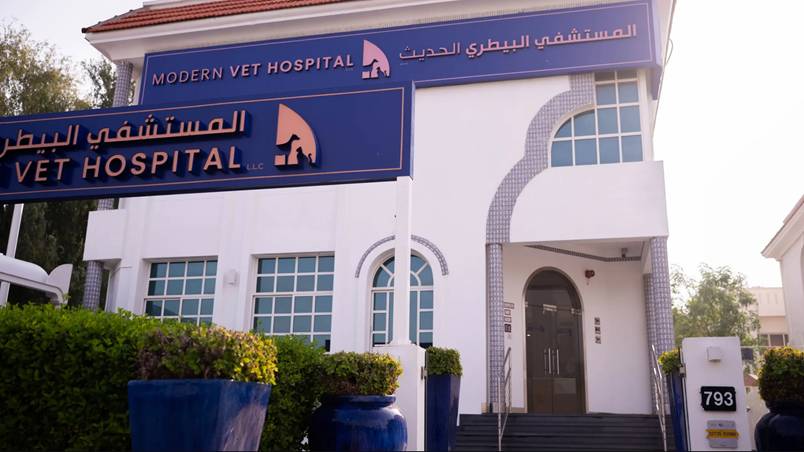
As the company developed, the range of care expanded well beyond general veterinary practice.
Modern Vet built an integrated model designed to manage patients across different levels of complexity, from preventive medicine and routine consultations to trauma, chronic disease, intensive care and complex surgical cases.
Rather than treating services as isolated departments, the company increasingly focused on coordinated case management.
A patient may move from initial consultation to diagnostics, stabilization, surgery, monitoring and longer-term recovery planning while remaining within one connected clinical pathway.
This required more than additional veterinarians.
It required multidisciplinary teams, internal communication, clear responsibility and infrastructure that could support complex decision-making.
Investing in Infrastructure
Technology became another important part of the company’s development.
Modern Vet invested in diagnostic and treatment infrastructure including CT imaging, digital radiography, high-resolution ultrasound, in-house laboratory capabilities, surgical and anesthesia systems and intensive care monitoring.
From a business perspective, the significance of this investment goes beyond owning advanced equipment.
Keeping more diagnostic and treatment capability inside the organization reduces reliance on external referrals and allows teams to manage a greater portion of the patient journey themselves.
That creates a more integrated experience for clients while giving clinicians faster access to information in cases where time matters.
The combination of technology and a multidisciplinary team also made it possible for Modern Vet to manage increasingly complicated cases internally.
Building Around Teams, Not Departments in Isolation
Modern Vet’s growth was also shaped by a collaborative approach to veterinary medicine.
Veterinarians, surgeons, radiologists, technicians, assistants and other team members work within a shared clinical structure rather than operating as disconnected services.
For the company, that approach serves two purposes.
Clinically, complicated cases can benefit from different areas of expertise.
Operationally, the business becomes less dependent on any one individual.
That principle mirrors the broader transformation Modern Vet went through as a company: moving from a traditional family clinic toward an organization whose systems, teams and processes are designed to continue functioning as the business expands.
The COVID-19 Stress Test
The strength of that structure became particularly visible during the COVID-19 pandemic.
Like many businesses, Modern Vet initially expected severe disruption. Management prepared for the possibility of significant financial pressure.
Instead, demand for veterinary care increased.
With people spending more time at home, owners were noticing health problems in their pets more quickly. Veterinary services remained essential, and the hospital began seeing a wide range of cases, including emergencies, fractures, heart conditions and cancers.
Modern Vet’s multi-specialty structure allowed it to absorb that demand.
Rather than contracting during the period, the company reported revenue growth of 40%.
The pandemic became an unexpected stress test for the operating model that had been built during the preceding years.
The lesson was not simply that demand had increased. It was that the business already had enough structure to respond when it did.
Scaling Without Starting Over Each Time
Modern Vet has since expanded from one clinic into multiple locations across Dubai.
But opening additional sites was not simply a matter of copying a logo onto another building.
The company’s ability to scale depends on maintaining common clinical protocols, documentation, workflows and standards across branches.
That is one of the less visible challenges of growing any professional service business.
A founder can personally supervise one location. A larger organization needs systems that can reproduce quality without requiring the founder to stand in every room.
Modern Vet’s evolution from a neighborhood clinic into an integrated veterinary group reflects that transition.
Patient Care as a Growth Strategy
The company’s expansion has also followed an unusual commercial principle.
According to Alshiha, the business did not build its strategy primarily around maximizing margins. Instead, it invested in services and capabilities that could strengthen patient care and credibility, even when the immediate financial return was not obvious.
Word of mouth became an important part of that growth.
In veterinary medicine, trust compounds slowly. A successful outcome, an emergency handled properly or a difficult case managed responsibly may lead to recommendations years after the initial investment that made the treatment possible.
For Modern Vet, that reputation became part of the business model.
From Family Clinic to a Platform for Growth
The systems developed inside Modern Vet eventually became a foundation for something larger.
The company’s experience with 24/7 care, multi-specialty medicine, advanced diagnostics and structured operations helped inform the development of Vet Alliance, the broader veterinary group led by Alshiha.
Modern Vet, however, remains the business where many of those ideas were first tested in practice.
Its evolution illustrates an important distinction between making a small business bigger and actually building an organization capable of scale.
One means adding more people and locations.
The other requires changing the underlying structure.
The SMB Lesson Behind Modern Vet
Modern Vet began with a deeply personal event and a straightforward mission: give families more options when their pets face serious medical problems.
But purpose alone did not create a scalable company.
The business had to modernize an aging brand, move beyond dependence on individual practitioners, introduce standardized processes, invest in infrastructure, develop multidisciplinary teams and create systems that could work across multiple locations.
That transformation took Modern Vet from a single veterinary clinic opened in 1995 to a broader veterinary organization operating across Dubai more than three decades later.
For other small and medium-sized businesses, the most relevant part of the story may be surprisingly ordinary.
Growth does not begin when the next branch opens.
It begins when the first location can operate on systems strong enough to be repeated.