
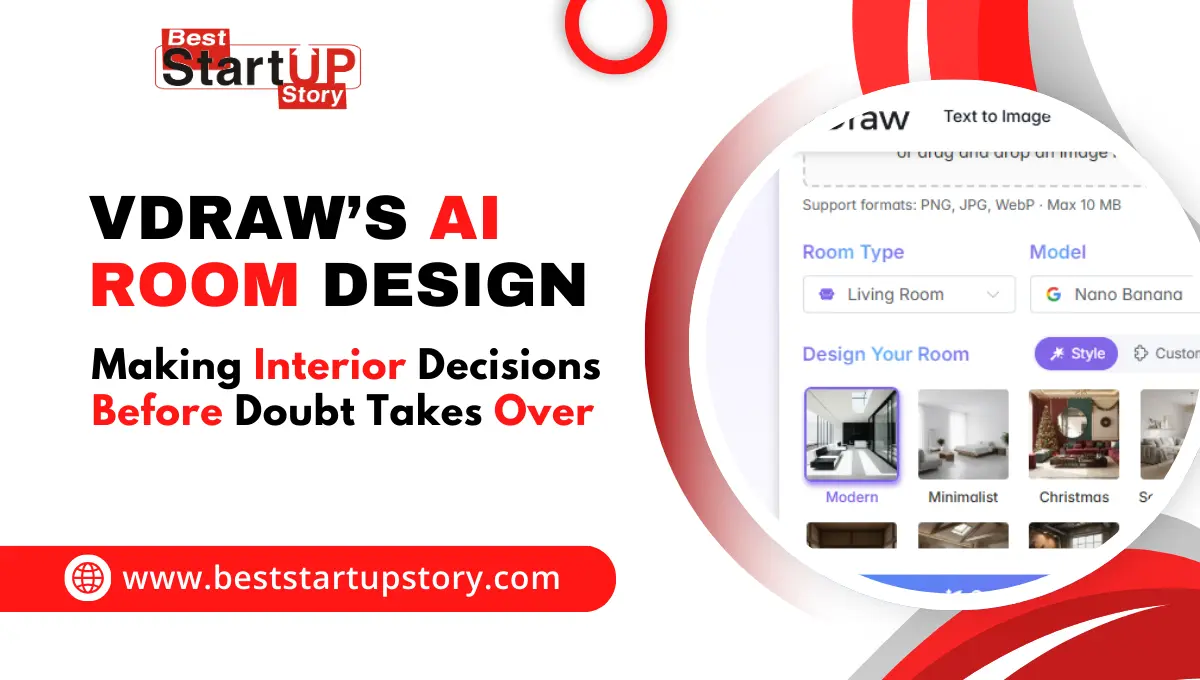
Most room design projects don’t fail because of bad taste. They stall because of hesitation. People pause, compare, second-guess, and leave rooms unfinished for months. VDraw’s AI Room Design is built for that uncomfortable middle stage, when ideas exist but confidence has not yet formed.
Table of Contents
The Moment When Room Design Gets Stuck
Designing a space usually starts with excitement. It slows down the moment real constraints appear. Measurements, lighting, existing furniture, and budget quietly limit what felt possible at the beginning.
When Imagination Collides With Reality
Ideas look generous in the abstract. Once applied to an actual room, they often shrink. Colors feel heavier, layouts feel tighter, and proportions behave differently than expected. This is often where people stop moving forward, not because they dislike their ideas, but because they can’t picture the outcome clearly enough to commit.
Decision Fatigue Comes Earlier Than Expected
After browsing dozens of references, the mind doesn’t feel inspired anymore. It feels tired. Every new option creates more doubt instead of clarity. At this stage, progress requires reduction, not expansion. Visual confirmation becomes more valuable than more ideas.
Why Visual Confidence Matters More Than Taste
Taste evolves. Confidence decides. People rarely regret a choice they felt certain about, even if it wasn’t perfect. What causes regret is acting without seeing the full picture. This is where AI Room Design becomes less about creativity and more about risk control.
How VDraw Changes the Design Process
VDraw approaches room design as a sequence of decisions, not a single creative leap. The tool fits into how people actually think when working with real spaces.
Working From Real Rooms, Not Blank Canvases
Starting from an existing room image changes everything. The walls, windows, and lighting are already defined. Instead of forcing imagination to stretch around constraints, the system works inside them. When users first encounter AI Room Design in this context, the shift feels practical rather than experimental.
Text Prompts as Direction, Not Decoration
Short, intentional prompts work best. Instead of chasing abstract styles, users tend to describe how they want the room to feel and function. Calm mornings, warmer evenings, clearer workspace boundaries. These cues guide results in a way that feels grounded in daily life, not design theory.
Iteration That Feels Like Thinking Out Loud
Seeing variations side by side changes judgment. Preferences surface naturally. People notice what consistently feels wrong faster than what feels right. That feedback loop reduces emotional attachment to any single idea and makes final choices feel earned rather than accidental.
Practical Uses That Go Beyond Inspiration
AI Room Design becomes most valuable when design decisions affect time, money, or other people.
Renovation Planning Without Reversals
Renovation mistakes are expensive because they reveal themselves late. Testing layout and material ideas visually before work begins reduces revisions mid-project. It allows people to lock decisions earlier, which shortens timelines and lowers stress.
Furniture Decisions With Fewer Surprises
Scale issues are hard to predict. A sofa that looks perfect online can dominate a room once delivered. Visual previews expose these problems early. When placement feels wrong on screen, it almost always feels wrong in reality.
Communicating Ideas to Others Clearly
Explaining a design idea verbally often leads to misunderstandings. Visuals remove ambiguity. Whether working with a contractor, a partner, or a client, showing concrete variations accelerates agreement and avoids repeated explanations.
Managing Visual Assets After Design Decisions
Room visuals often travel beyond the design phase. They appear in presentations, listings, or social content. At that stage, clarity and cleanliness matter as much as design quality.
Removing Distractions From Final Visuals
Generated visuals sometimes carry unwanted overlays or marks that distract from the space itself. When visuals are reused for marketing or documentation, these elements become obstacles. VDraw’s integrated Video Watermark Remover helps clean up assets so attention stays on the room, not the tool used to create it.
Preparing Visuals for Different Contexts
A room mockup used for internal planning isn’t the same as one shared publicly. Cleaning and refining visuals allows the same asset to serve multiple purposes without rework. This flexibility saves time and keeps presentation quality consistent.
Why AI Room Design Fits Human Decision Patterns
People don’t decide in straight lines. They move forward, pull back, and test alternatives. Tools that ignore this behavior often feel frustrating rather than helpful.
Reducing Regret Instead of Maximizing Options
Unlimited choice sounds appealing, but it often increases anxiety. AI Room Design works best when it narrows possibilities to a manageable range. Fewer options with clearer differences lead to faster and calmer decisions.
Recognizing When Enough Is Enough
At some point, exploration stops adding value. Good tools help users recognize that moment. When a design feels stable across variations, confidence replaces curiosity. This is usually when people are ready to act.
Designing for Use, Not Display
Rooms are lived in, not admired from a distance. Successful designs account for movement, comfort, and routine. AI Room Design outputs that feel good to live with tend to age better than those optimized purely for visual impact.
Living With the Decision
The real test of any design choice happens after the tools are closed. Confidence shows up in daily use, not in screenshots.
Comfort as a Long-Term Metric
When a space feels right, people stop thinking about it. That mental quiet is often the best indicator of a good decision. AI Room Design supports this outcome by aligning visuals with realistic expectations early on.
Fewer Second Thoughts Over Time
Decisions made with visual clarity tend to stick. Even if tastes evolve, the memory of having chosen deliberately reduces regret. That emotional residue matters more than perfect alignment with trends.
Designing With Less Friction
When doubt is reduced early, the entire process feels lighter. Planning, purchasing, and execution move faster. VDraw’s approach to AI Room Design fits into this flow by supporting judgment instead of replacing it.
Closing Perspective
Room design doesn’t require more inspiration. It requires fewer unknowns. VDraw’s AI Room Design helps bridge the gap between imagining a space and trusting the decision to build it. By reducing hesitation rather than amplifying novelty, it supports choices that feel steady, intentional, and easier to live with.