
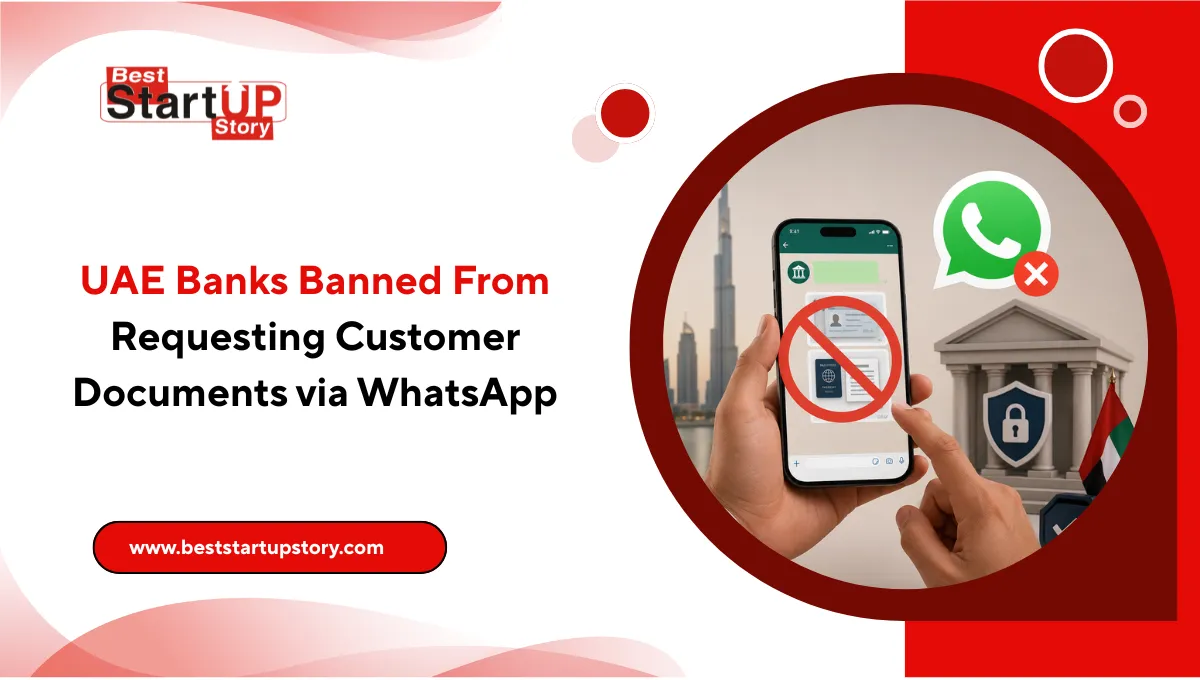
As per the official directive of the Central Bank of the UAE (CBUAE), all licensed banks and financial institutions are mandated not to use messaging platforms like WhatsApp and Telegram to provide financial services and collect sensitive data. The enforcement of the ban began from 30th April, 2026.
The UAE Central Bank has banned the use of all messaging apps or platforms for licensed banks and financial institutions that were once used to provide services and collect consumer information for convenience. The introduction of such a rule rewrites how consumers’ data is protected from getting compromised by any means.
Why the UAE Central Bank Banned Messaging Platforms?
The Central Bank’s directive was issued on 17th April, 2026, with a deadline for finalized compliance for all institutions from 30th April, 2026.
The UAE’s Central Bank banned using online messaging platforms for the following reasons:
- To protect consumers from fraudulent activities.
- Reduce the chances of data or information being compromised, leaked, or forwarded.
- Maintain strict compliance with the UAE Data Sovereignty regulations.
What Institutions are Impacted by the Ban?
The banks and financial institutions that are impacted by the ban on messaging app usage for consumer services, data collection, and communication include:
- Banks
- Finance Companies
- Exchange Houses
- Payment Service Providers
- Insurance Firms
What Banks and Financial Institutions Can and Cannot Do?
As the banks and other financial institutions are mandated not to use messaging apps, they are instead asked to utilize:
- Official Mobile Apps
- Online Banking Portals
- Recorded Call Centers
- Physical Branches
What the financial institutions cannot do includes:
- No Document Exchange: Financial institutions are strictly prohibited to collect or request for any kind of documents, like Emirates IDs, passports, and bank statements.
- No Authentication Details: Authentication details, such as OTPs (One-Time Passwords), PINs, or passwords, cannot be shared through any messaging platform.
- Transaction Halts: These institutions cannot initiate or confirm any transactions or loans on the messaging platforms.
What are the Potential Impacts on Customers?
As all financial institutions, service providers, and banks are prohibited from using WhatsApp or Telegram, customers have the advantages of:
- Reduced Social Engineering
Before the ban was introduced, consumers were vulnerable to fraud calls or scammers posing as a banking official or service provider to trick consumers into revealing their personal information, like banking details and passwords.
However, with this ban, consumers are provided with high protection and will no longer have to face financial scams and loss of money.
- No Unauthorized Data Sharing
UAE Central Bank’s ban removes the scope of sharing personal data, information, and documents through messaging platforms, protecting against unauthorized sharing of passwords, ID cards, OTPs, and related information.
- Local Data Privacy
The UAE Central Bank’s ban maintains strict compliance with the regulations regarding data and privacy, which mandate that data must remain within the UAE boundaries, enhancing data security and privacy.
- Shift to Official Apps
After this ban, customers are advised to use the official portals and applications of the bank and respective financial institutions to acquire services, complete transactions, and share documents. In addition, awareness campaigns may help the UAE government in effective adoption of this ban.
- Low Convenience
Navigating to the official portals or applications of the banks and financial institutions can be less convenient for consumers, due to server and technical issues and temporary slowdowns, which may not happen frequently but can cause inconvenience.
However, on the bright side, their data and personal information are protected through end-to-end encrypted systems integrated in the official portals and platforms.
The UAE’s Central Bank ban on messaging apps usage for services and data collection has redefined data security by providing enhanced protection. The banks and financial institutions will shift from using instant messaging apps to official portals to combat fraud, improve data sovereignty, and secure customer information.
Also Read: