
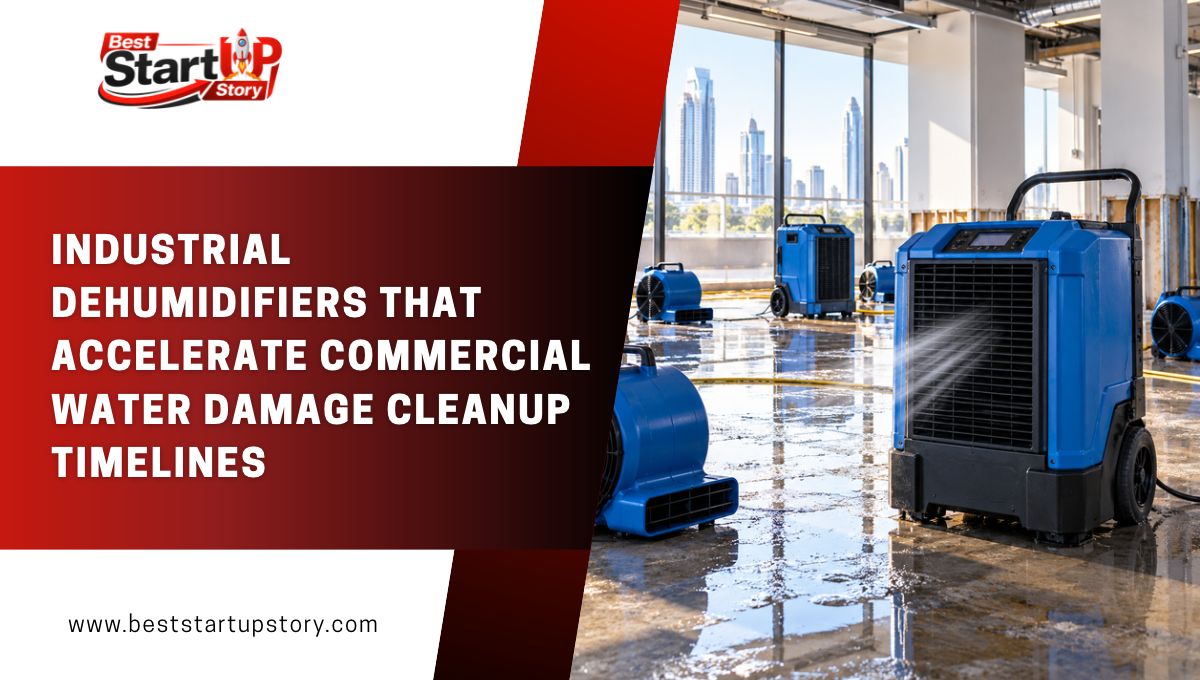
Commercial water damage can disrupt business operations, damage valuable equipment, and create expensive delays. Whether the cause is a burst pipe, leaking roof, flooding, or a sprinkler malfunction, removing standing water is only the first step. Moisture can remain trapped inside walls, flooring, insulation, and other building materials, creating conditions that may lead to mold growth and structural deterioration.
Industrial dehumidifiers play an important role in accelerating commercial water damage cleanup timelines. These high-capacity machines remove excess moisture from indoor air, helping wet materials dry more efficiently. When combined with professional water extraction, air movers, and moisture monitoring, industrial dehumidifiers can help businesses recover faster and reduce unnecessary downtime.
Understanding Commercial Water Damage Cleanup
Commercial water damage cleanup involves several steps, including water extraction, damage assessment, structural drying, cleaning, and restoration. Large commercial properties often contain warehouses, offices, retail spaces, and specialized equipment that require different drying methods.
Water can spread beneath flooring, behind walls, and into concealed building cavities. Even when visible surfaces appear dry, hidden moisture may remain inside porous materials. Without proper drying, these areas can develop unpleasant odors, mold problems, and further damage.
Industrial dehumidifiers help restoration professionals control indoor humidity and create better conditions for removing moisture from affected materials.
What Are Industrial Dehumidifiers?
Industrial dehumidifiers are powerful machines designed to remove large amounts of water vapor from the air. Unlike household units, they are built to operate in demanding environments such as commercial buildings, manufacturing facilities, warehouses, and flooded properties.
Two common types are refrigerant and desiccant dehumidifiers.
Refrigerant Dehumidifiers
Refrigerant dehumidifiers draw humid air across a cold coil, causing moisture to condense into liquid water. The collected water drains away, and the machine returns drier air to the environment.
These units are often suitable for warm, humid commercial spaces, including offices, retail stores, and other buildings affected by water damage. Their effectiveness depends on temperature, humidity, and operating conditions.
Desiccant Dehumidifiers
Desiccant dehumidifiers use moisture-absorbing materials to remove water vapor from the air. They can be particularly useful in colder environments or applications requiring very low humidity levels.
These systems are commonly considered for industrial facilities, large warehouses, and specialized drying projects. The choice between refrigerant and desiccant equipment depends on the building’s conditions, the materials affected, and the required drying targets.
How Industrial Dehumidifiers Accelerate Cleanup Timelines
Industrial dehumidifiers improve drying conditions by continuously removing excess moisture from indoor air. This helps wet materials release water more effectively.
1. Removing Excess Moisture From Indoor Air
After water extraction, humidity levels can remain high inside a commercial property. When the air contains substantial moisture, water evaporates more slowly from wet materials.
Industrial dehumidifiers reduce indoor humidity, allowing moisture to evaporate from drywall, flooring, timber, and other affected surfaces. The machines then capture that moisture from the air, supporting a continuous drying process.
This approach can accelerate cleanup compared with relying on natural ventilation alone, especially in enclosed commercial spaces.
2. Supporting Faster Structural Drying
Building materials such as concrete, wood, insulation, and drywall can absorb significant amounts of water. Drying these materials properly is essential before repairs and reconstruction can begin.
Industrial dehumidifiers help create favorable conditions for removing moisture from affected structures. When combined with strategically positioned air movers, they improve the overall drying process.
However, drying times vary depending on the extent of water exposure, material thickness, temperature, humidity, and equipment capacity. Professional moisture measurements help determine whether materials have reached suitable dryness levels.
3. Reducing Business Downtime
Water damage can interrupt sales, reduce employee productivity, and prevent businesses from using important parts of their buildings. Retail stores may lose customers, while warehouses may experience delays in inventory handling and distribution.
Efficient dehumidification can help restoration teams complete the drying stage sooner when conditions allow. This may support earlier repairs, equipment replacement, and reopening.
Although industrial dehumidifiers cannot eliminate every restoration delay, they can help businesses manage moisture more efficiently and reduce avoidable interruptions.
4. Helping Reduce Mold Risks
Moisture creates conditions that can encourage mold growth, particularly when porous materials remain wet for extended periods. Mold may develop behind walls, beneath flooring, and in other concealed spaces.
Industrial dehumidifiers help lower humidity and support faster drying, making them an important part of moisture control. However, they do not remove existing mold or guarantee that mold will not develop.
Restoration professionals must also identify hidden moisture, address contamination, and remove materials that cannot be safely restored when necessary. Prompt drying is important because mold may begin growing within approximately 24–48 hours under favorable conditions.
Combining Dehumidifiers With Other Restoration Equipment
Industrial dehumidifiers work best when used alongside other water damage restoration equipment.
Water Extraction Equipment
Pumps and specialized extraction tools remove standing water from floors, carpets, and other accessible areas. Removing bulk water first reduces the moisture load and allows dehumidifiers to focus on drying the remaining damp materials.
Commercial Air Movers
Air movers circulate air across wet surfaces, encouraging evaporation. The resulting water vapor can then be removed by industrial dehumidifiers.
Proper equipment placement helps improve airflow and prevents stagnant areas from slowing the drying process.
Moisture Meters and Thermal Imaging
Moisture meters help technicians measure moisture levels in suitable materials and track drying progress. Thermal imaging cameras can identify temperature patterns that may indicate potential moisture problems, although they cannot directly confirm moisture.
These tools help restoration teams locate affected areas, adjust equipment placement, and verify drying progress more accurately.
Choosing the Right Industrial Dehumidifier
Selecting the correct equipment is essential for efficient commercial water damage cleanup. Businesses should consider several factors before choosing a system.
- Building size: Large warehouses and interconnected commercial spaces may require multiple units.
- Moisture severity: Extensive flooding generally requires more intensive drying than a minor plumbing leak.
- Temperature and humidity: Refrigerant and desiccant systems perform differently under various environmental conditions.
- Building materials: Concrete, drywall, wood, and insulation retain moisture differently.
- Equipment capacity: Actual moisture removal depends on operating conditions, airflow, drainage, and equipment placement.
A professional assessment helps determine the appropriate equipment and drying strategy for each property.
Best Practices for Faster Commercial Water Damage Cleanup
Businesses can improve recovery by responding quickly and following a structured restoration process.
First, stop the source of water intrusion to prevent additional damage. Next, arrange a professional assessment to identify affected materials and potential safety hazards.
Remove standing water as soon as it is safe, then deploy suitable dehumidifiers and air movers. Restoration teams should monitor humidity and moisture levels throughout the drying process rather than relying on the appearance of surfaces.
Businesses should also avoid removing equipment too early. Materials that feel dry externally may still contain moisture internally. Proper verification helps reduce the risk of recurring moisture problems and additional repair costs.
Conclusion
Industrial dehumidifiers are essential tools for accelerating commercial water damage cleanup timelines. By reducing indoor humidity and supporting structural drying, they help restoration professionals manage moisture more effectively and reduce avoidable delays.
When combined with water extraction, air movers, moisture monitoring, and appropriate restoration procedures, these machines can help businesses return to normal operations more efficiently.
The key to successful restoration is prompt action, suitable equipment selection, and careful monitoring. By addressing visible and hidden moisture, businesses can protect their properties, reduce moisture-related risks, and support a safer, more effective recovery process.