I came across a report claiming that around 67% of startups and small businesses now use AI in their branding efforts. That caught my attention. I paused for a bit and started exploring the tools businesses were actually using.
Most of what I found was fairly similar. Logo generators. Image creators. Social media design tools. Then I came across Zawa AI. What stood out was the claim. It wasn’t just about helping businesses create a logo, but about helping them build an entire brand.
That’s a much bigger challenge. For startups, creating a unique identity from scratch isn’t easy. You need to stand out, attract attention, and look consistent from day one. So naturally, I wanted to see how Zawa AI approached that problem.
Quick Overview: What Is Zawa AI?
Zawa AI is an AI-powered branding platform aimed at small businesses. The platform brings together several parts of the branding process in one place. Users can create:
- logos
- brand guidelines
- visual identity assets
- marketing materials
- social media content
- posters
- menus
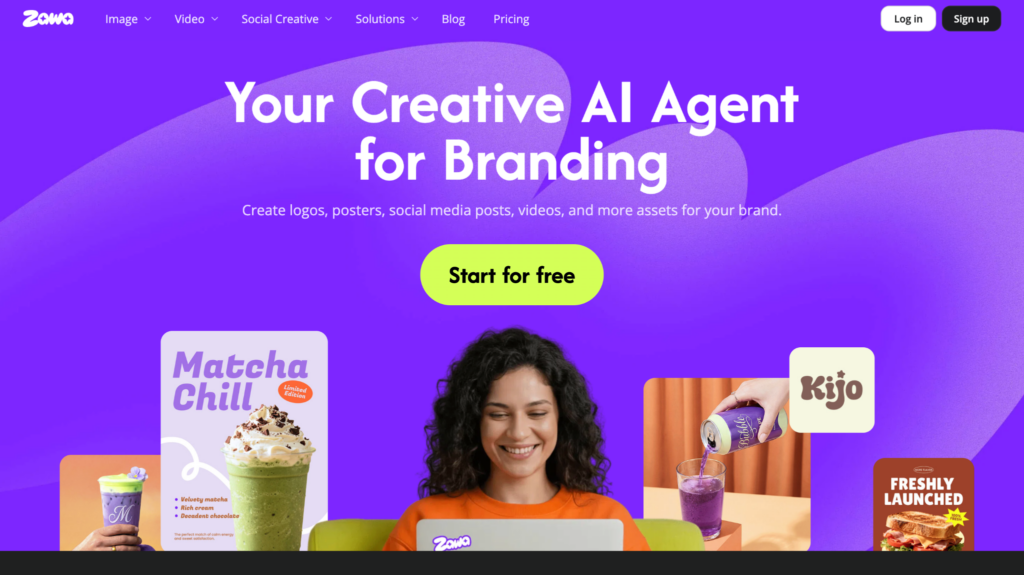
Most AI tools help create a single asset. Zawa is built around creating a broader brand identity and applying it across different materials.
But how well do these features actually work in practice?. Let’s take a closer look at each of them and see whether the platform delivers enough value to justify using it as an all-in-one branding solution.
What Level of Brand Identity Depth Does Zawa AI Offer?
When you look at how Zawa AI handles brand identity, the first thing that stands out is how little separation there is between different design steps.
In most cases, logo design, color selection, and basic brand setup are treated as separate tasks, often handled one after another using different tools or decisions.
Here, they appear together as part of the same flow, which changes how the output feels from the start.
What you end up getting is not just a single design element, but a bundled identity set that already includes multiple layers:
- A logo generated from a simple idea input, without going through a traditional design process
- Color palettes that are automatically aligned with the same visual direction, rather than being explored independently
- A brand kit that groups logo variations, colors, and basic identity structure into one ready set
What’s interesting is not the individual outputs themselves, but the fact that they are produced together without requiring the user to move between separate steps or tools.
What Types of Marketing Assets Can Zawa AI Generate?
Zawa AI generates a wide range of brand and marketing assets, from identity creation to promotional content. Let us quickly take a look at this:
Logos
Zawa AI also comes with an AI logo maker, which is one of the first features you’ll come across on the platform.
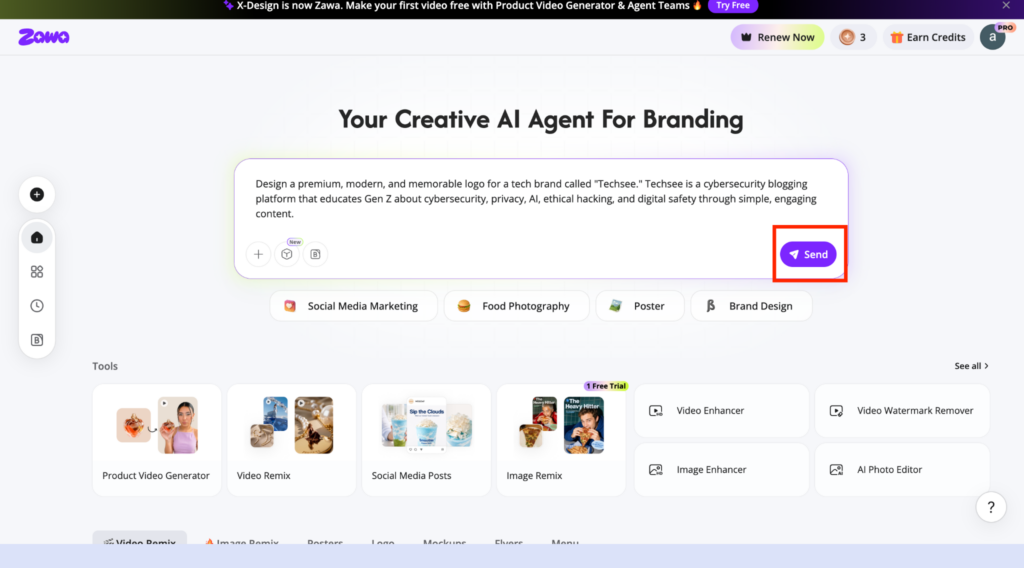
Logo generation here is not limited to templates. You can just set the industry, brand type, and a simple direction, and it generates multiple logo options in one click.
The key difference is speed and variation. In around 90 seconds, you get several different logo directions, not just small tweaks of the same idea.
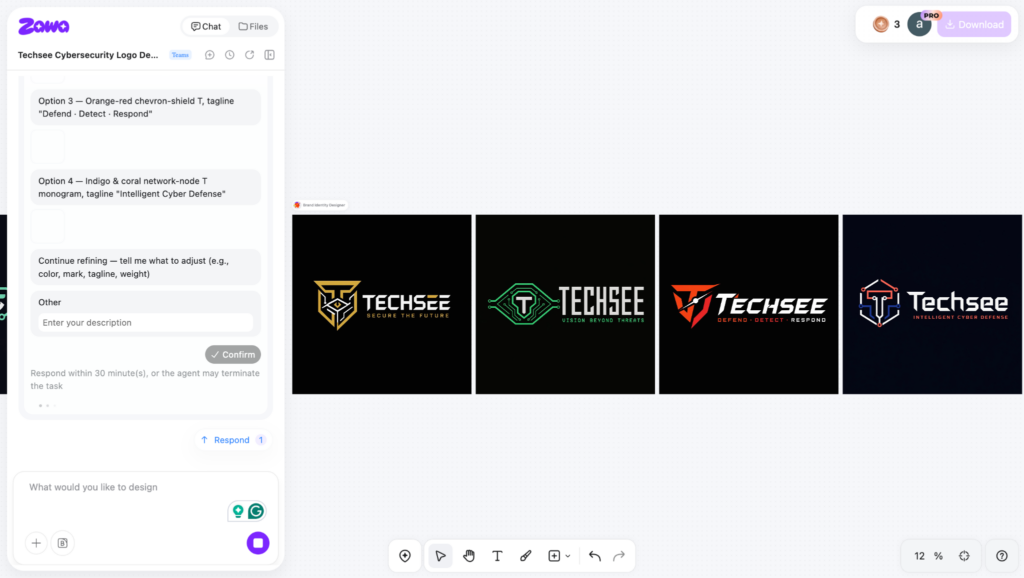
It also doesn’t lock you into the first result. You can refine the logos using a prompt window instead of starting from scratch again. This makes it easier to adjust things quickly and get to something usable faster.
Social Media Posts
Zawa AI generates social media content based on the brand identity. Using an online poster maker, you can create posts and campaign visuals without designing each one manually.
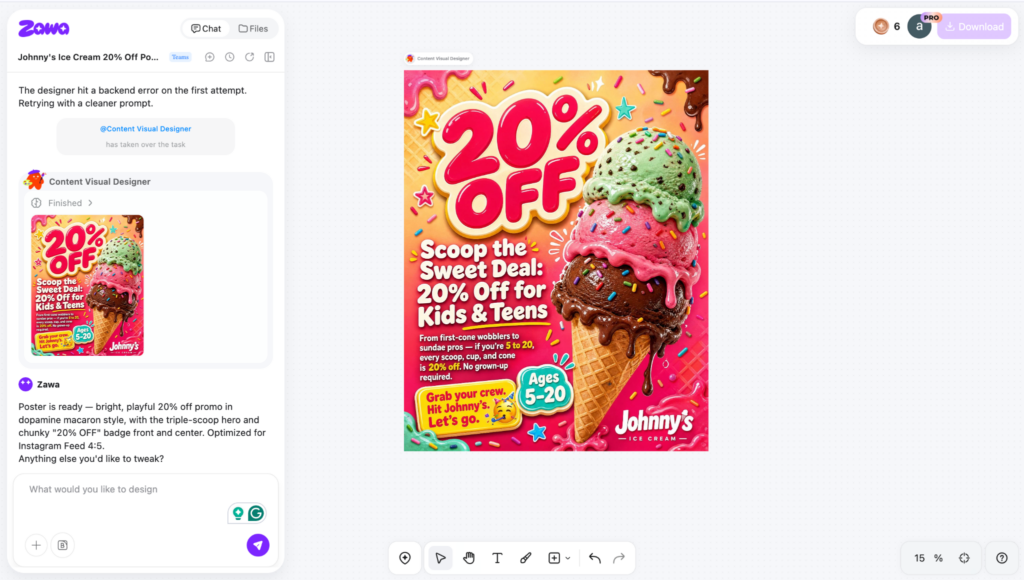
You don’t need to rebuild each design from scratch. Even simple prompts like “change the aspect ratio from Instagram to X post” are enough to adapt the same visual for different formats.
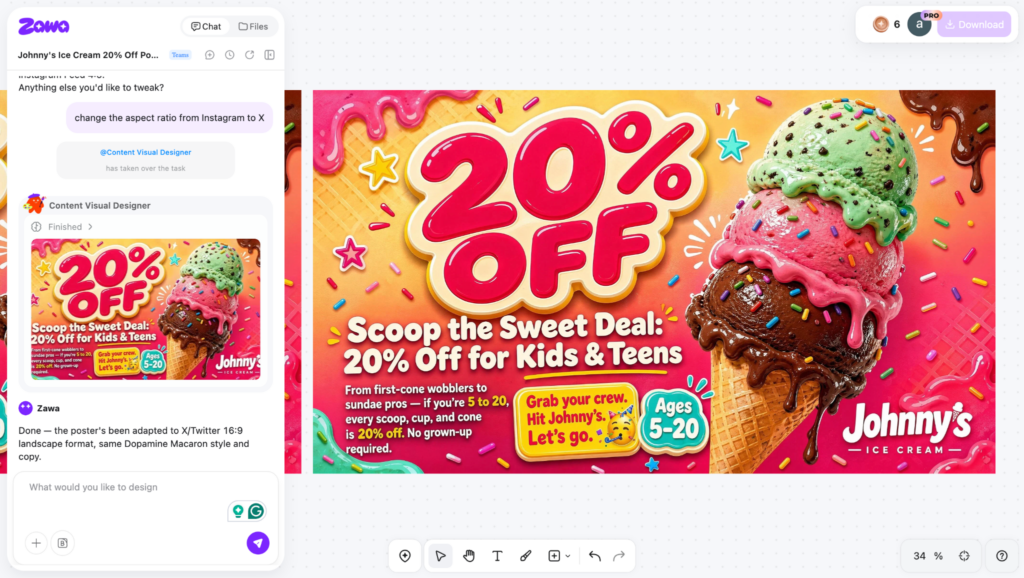
The best part?. The output stays aligned with the same visual identity. In fact, the content looks consistent across multiple campaigns. It also helps in quickly adapting one idea into multiple formats instead of starting each design from scratch.
This is a win-win for startups that pay separately for each platform.
Product & Food Photography
While exploring the platform, I came across something interesting: Food Photography.
For food startups, this solves a real problem. Good food photography is expensive. It often means hiring photographers and paying for professional editing.
Here, you can start with a simple photo of your dish. Using prompts, you can improve the image in different ways. The background can be changed. In fact, aspects like lighting can be adjusted. Even the overall presentation can be refined.
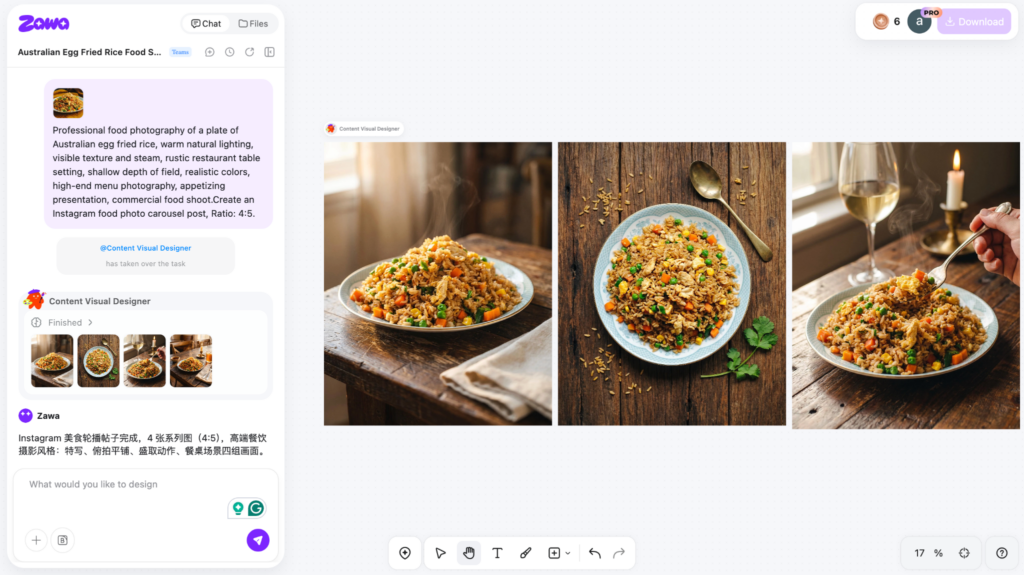
What impressed me was how much of the editing process is handled automatically. The AI helps create a better balance of lighting and detail.
This can be a practical way to create more polished food visuals without a professional photoshoot every time.
Brand Kits
Creating a complete brand kit can easily take a week or two. There is usually a discovery phase, initial concepts, and revisions before everything comes together.
What surprised me here was how quickly that first version came together. Instead of building each element separately, Zawa AI generates logo variations, color palettes, and visual guidelines in a single workflow.
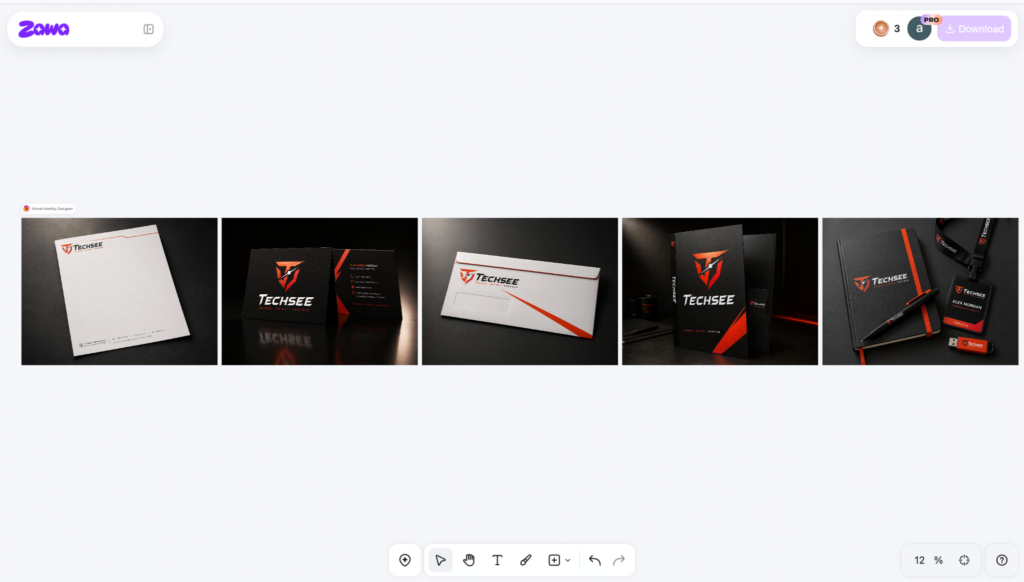
The result isn’t necessarily the final version, but it gives businesses a structured brand kit in minutes rather than waiting 7–14 days for an initial draft. And if something feels off, changes can be made through prompts instead of going through another round of revisions.
For small businesses and first-time founders, that reduction in time and effort is one of the more practical benefits of the platform.
How Zawa AI Supports Brands After Creation?
Branding starts after the brand kit is generated. New products get launched. Campaigns change. Marketing materials need updates throughout the year.
There is a Brand Archive in Zawa AI where all the logos and other assets are kept in the dashboard. You do not have to create fresh files, but keep referring back to your old work and make things better from there.
One of the posters that was created for an old campaign can be used for a new campaign. The same goes for a social media asset; you may just need to tweak the message part of it.
There is going to be a record of your design history through all these stages of growth. Even when the brand takes a completely new direction with respect to visuals, old designs can be edited according to the new branding.
This will ensure that you do not have to start again from scratch.
Zawa AI Pricing
| Plan | Monthly Credits | Key Limits |
| Free | 60 daily credits | Up to 20 image generations per day, 2 brand kit generations |
| Plus | 800 credits/month | Up to 160 image generations/month, 11 video generations (5s) |
| Pro | 3,500 credits/month | Up to 700 image generations/month, 100 video generations (5s) |
| Max | 8,000 credits/month | Up to 1,600 image generations/month, 230 video generations (5s) |
Who Is Zawa AI Best For?
| User Type | Why |
| Small Business Owners | Can generate marketing assets without hiring a design team. |
| Restaurant Owners | Food photography and seasonal marketing tools are particularly relevant. |
| Retail Stores & Boutiques | Useful for store branding, signage, and social media content. |
| First-Time Founders | Helps turn a business idea into a visual brand without design experience. |
| Freelance Designers | Can speed up branding and content creation for SMB clients. |
| Marketing Teams | Useful for producing campaign assets and maintaining brand consistency. |
| Large Enterprises | May be less relevant for teams with dedicated designers. |
Final Verdict
After using Zawa AI, I felt its biggest strength is not one feature. It’s how many branding and marketing tasks it brings into one place.
A small business may need a logo, brand kit, menu, posters, product photos, and social media content. Traditionally, these tasks take days. They may also require multiple tools or freelancers.
Here, much of that work happens in a single workflow. Logo concepts are generated in minutes. Brand kits come together quickly. Existing designs can be edited through prompts. Marketing assets can be repurposed instead of recreated.
The Brand Archive was another useful addition. Past designs remain accessible and can be updated as campaigns change or branding evolves.
Overall, I see the strongest fit for small businesses and startups. For these users, the biggest benefit is not just saving money. It’s saving time while keeping branding and marketing efforts organized.